

Early orthodontic evaluation allows dentists to identify and address developing bite and alignment problems before they become significantly more complex and costly to treat. At Wilmette Dental in Wilmette, IL, our doctors monitor orthodontic development from childhood, providing timely intervention that guides jaw growth, creates space for permanent teeth, and lays the foundation for a healthy, well-aligned smile.
Why Early Orthodontic Evaluation Matters
The American Association of Orthodontists recommends that children receive their first orthodontic evaluation by age seven. At this stage, the first permanent molars and incisors have typically erupted, providing enough information to evaluate bite relationships, identify developing alignment concerns, and determine whether intervention is needed.
Most children evaluated at this age do not require immediate treatment. However, early evaluation allows your dentist to monitor development proactively, identify the optimal timing for future treatment, and intervene when conditions exist that respond best to correction during active jaw growth.
Identifying problems early consistently results in simpler treatment, better outcomes, and reduced overall treatment time compared to addressing the same issues after growth is complete.

Growth Monitoring & Jaw Development Guidance
Children’s jaws are actively growing and highly responsive to guidance during the developmental years. This window of opportunity, when the bones are still malleable and growth can be directed, offers treatment possibilities that are not available once skeletal development is complete.
Dr. Moscinski, who holds certification in traditional straight wire orthodontics and digital aligner therapy from the American Orthodontic Society, monitors each child’s jaw development closely over time. Tracking growth patterns allows him to identify discrepancies between the upper and lower jaws, insufficient arch width, and other skeletal concerns at the stage when they are most effectively addressed.
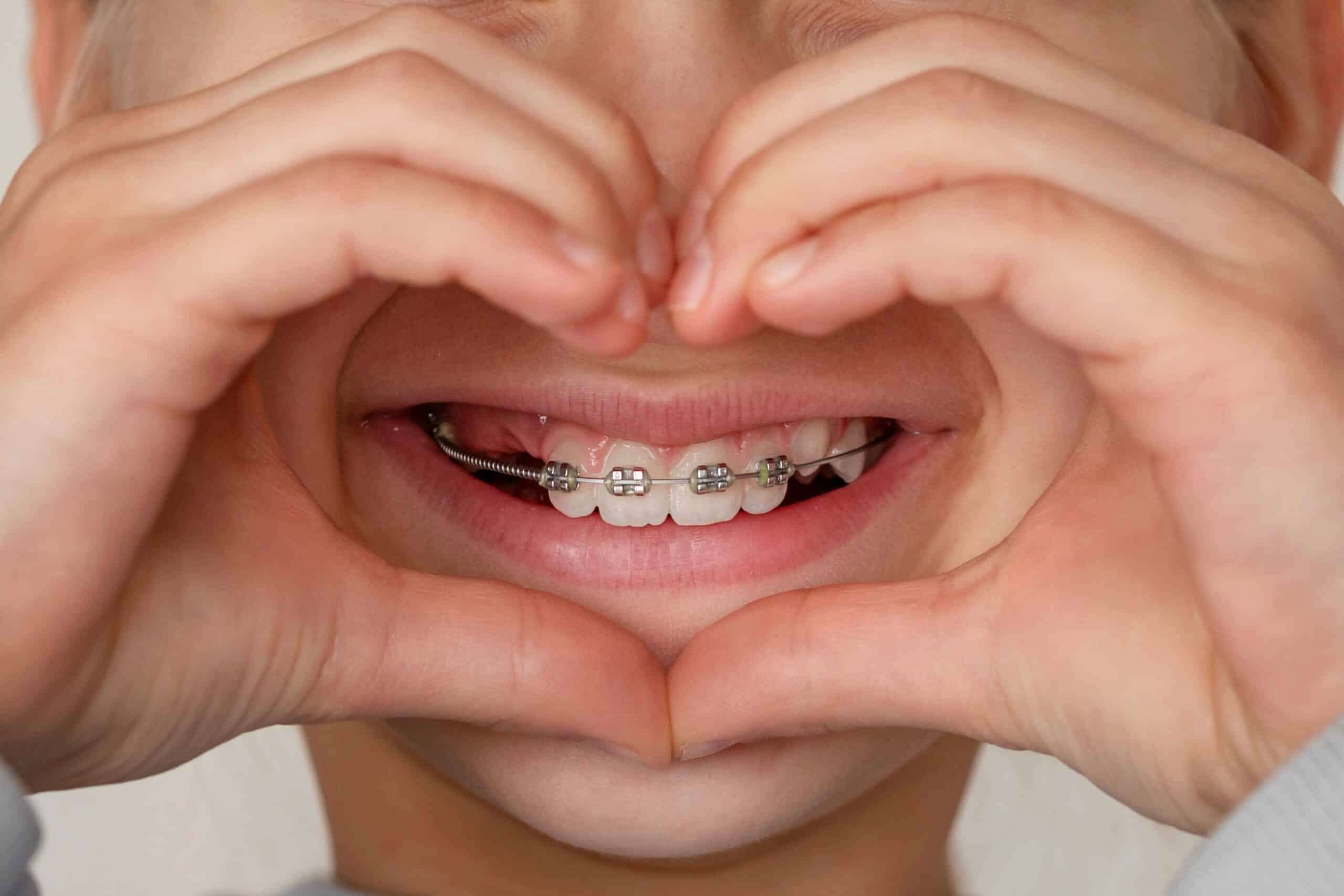
Space Maintainers After Early Tooth Loss
When a primary tooth is lost prematurely due to decay, injury, or extraction, the surrounding teeth can drift into the empty space, reducing the room available for the permanent tooth that will eventually erupt in that position.
Space maintainers are simple appliances that hold the space open following early tooth loss, ensuring the permanent tooth has adequate room to erupt properly. Placing a space maintainer after early tooth loss is one of the most straightforward and effective ways to prevent alignment problems from developing.
Phase One Braces & Interceptive Treatment
Phase One orthodontic treatment, also called interceptive treatment, is performed while a child still has a mix of primary and permanent teeth, typically between the ages of seven and ten. Not every child requires Phase One treatment, but for those who do, early intervention addresses conditions that would worsen significantly if left untreated until all permanent teeth have erupted.
Conditions That Benefit From Phase One Intervention:
- Significant crowding that creates insufficient space for erupting permanent teeth
- Crossbite affecting proper jaw development and facial symmetry
- Severe overbite or underbite with a skeletal component
- Protruding front teeth at an elevated risk of trauma
- Habits such as thumb sucking or tongue thrusting affect dental development
- Narrow upper arch requiring expansion before full permanent dentition erupts
Phase One treatment is focused and time-limited, addressing specific problems rather than fully aligning the entire dentition. A Phase Two treatment following the eruption of all permanent teeth completes full orthodontic correction.
Addressing Crowding & Bite Concerns Early
Crowding is one of the most common orthodontic concerns in children. When the jaw lacks sufficient space for all permanent teeth to erupt properly, teeth become crowded, rotated, and difficult to clean, increasing cavity and gum disease risk alongside cosmetic concerns.
Addressing crowding during jaw development allows for arch expansion that creates space without tooth extraction in many cases. Intervening after growth is complete limits treatment options and may require more invasive approaches to achieve the same result.

Preventing Complex Orthodontic Problems Later
The most compelling argument for early orthodontic evaluation is what it prevents. Skeletal discrepancies, severe crowding, and bite problems that are straightforward to address during growth can require surgical intervention or significantly more complex treatment when addressed in adulthood.
Early intervention reduces total treatment time, lowers the likelihood of tooth extraction, decreases the complexity of Phase Two treatment, and in some cases eliminates the need for further orthodontic treatment altogether.

Timing Orthodontic Care For Developing Smiles
Orthodontic timing is highly individual. Dr. Moscinski evaluates each child’s unique developmental trajectory to determine when treatment will be most effective. Some children benefit from intervention as early as age seven or eight. Others are best served by monitoring and waiting until the full permanent dentition has erupted before beginning treatment.
This individualized approach ensures that every patient receives the right care at the right time rather than treatment that is premature or unnecessarily delayed.
Supporting Long-Term Stability
Early orthodontic intervention does more than create a straighter smile. It establishes the structural foundation that supports long-term dental stability, healthy jaw function, and proper bite alignment throughout adulthood.
Teeth that erupt into a well-prepared, properly spaced arch are easier to clean, less prone to uneven wear, and more stable over time than teeth that have been crowded, rotated, or forced into position without adequate space.
A Proactive Approach To Your Child’s Smile
At Wilmette Dental, our doctors are committed to monitoring every child’s orthodontic development with the attention and expertise it deserves. Early evaluation is a simple step that can make a meaningful difference in your child’s long-term oral health.
Call our Wilmette, IL office or book online to schedule your child’s orthodontic evaluation.